Preparing for Residency: For Medical Students in Hawaiʻi
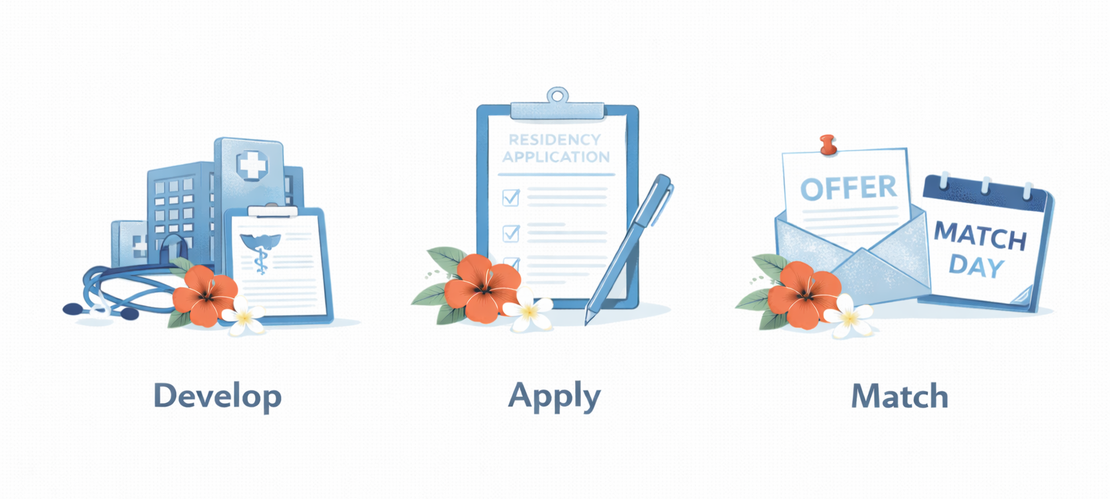
Table of Contents
Medical residency preparation requires four years of intentional planning throughout medical school. Competitive applicants demonstrate strong academic foundations, high board exam performance, excellent clinical evaluations, specialty-focused research, and strategic ERAS application planning. For medical students in Hawaiʻi, particularly those seeking residency positions within the islands, early networking and demonstrated geographic commitment can be especially important. This guide explains how to prepare for residency from M1 through Match Day, including board exams, clerkships, letters of recommendation, and specialty alignment. Residency success is built steadily through disciplined preparation and informed strategy.
Preparing for Medical Residency
Residency preparation does not begin in fourth year — it begins on the first day of medical school.
A competitive residency application is built over four years through consistent academic performance, strong clinical evaluations, strategic exam preparation, and meaningful professional relationships.
Preparation centers around five major pillars:
- Academic Performance
- Board Examinations
- Clinical Evaluations
- Research & Specialty Alignment
- Professional Relationships & Application Strategy
1. Academic Foundation (M1–M2)
During pre-clinical years, students should focus on:
- Mastering core medical sciences
- Developing disciplined study systems
- Building relationships with faculty
- Exploring potential specialties
While many schools use pass/fail grading, performance still affects:
- Clerkship readiness
- Faculty mentorship
- Letters of recommendation
- Overall professional reputation
A strong academic foundation supports later board exam success and clinical confidence.
2. Board Examinations
Board exams are among the most important objective components of a residency application.
For MD Students:
- USMLE Step 1 (Pass/Fail)
- USMLE Step 2 CK (Scored — highly influential)
For DO Students:
- COMLEX Level 1 & Level 2
- Many also take USMLE Step 2 CK
With Step 1 now pass/fail, Step 2 CK has become a critical metric for residency competitiveness.
Preparation requires:
- Early exposure to question banks
- Consistent practice throughout clinical rotations
- Dedicated study time
- Strong development of clinical reasoning
3. Clinical Performance (M3–M4)
Third-year clerkships are crucial.
Residency programs evaluate:
- Work ethic
- Professionalism
- Teamwork
- Reliability
- Initiative
- Clinical reasoning
Strong clerkship evaluations — especially in the intended specialty — significantly strengthen an application.
Sub-internships (acting internships) during fourth year are particularly important. These rotations allow students to function at a higher level of responsibility and often lead to stronger specialty-specific letters.
4. Letters of Recommendation
Residency applications require:
- Specialty-specific letters
- Strong clinical evaluations
- Letters from physicians who have directly supervised patient care
Strong letters:
- Provide detailed examples of performance
- Demonstrate readiness for residency-level responsibility
- Highlight professionalism and teamwork
This is why relationship-building during clerkships is essential.
5. Research & Specialty Alignment
Not all specialties require extensive research, but competitive fields often expect it.
Research may include:
- Clinical research
- Case reports
- Posters or presentations
- Publications
- Quality improvement projects
More important than quantity is alignment. Sustained interest in a specialty — demonstrated through electives, research, and mentorship — strengthens credibility.
6. ERAS & Application Strategy
The residency application process includes:
- Preparing a personal statement
- Updating a professional CV
- Securing letters through ERAS
- Selecting programs strategically
- Geographic planning
Application strategy matters as much as credentials. Program selection should align with academic profile, specialty competitiveness, and long-term career goals.
7. The Residency Match (NRMP)
Students participate in:
- ERAS application submission
- Interview season
- Ranking programs
- Match Day
Understanding how the Match algorithm works can reduce anxiety and improve ranking strategy.
Timeline for Residency Preparation
M1
- Explore specialty interests
- Build faculty relationships
- Develop strong study systems
M2
- Prepare seriously for Step 1
- Begin specialty-specific research if interested
M3
- Perform strongly in clerkships
- Identify intended specialty
- Build relationships for letters
M4
- Complete sub-internships
- Take Step 2 CK early
- Apply strategically
Considerations for Students from Hawaiʻi
Students who hope to:
- Match into residency programs in Hawaiʻi
- Return to practice in rural communities
- Train at programs affiliated with JABSOM
should begin networking early.
Residency positions within Hawaiʻi are limited. Demonstrated geographic ties, community commitment, and interest in serving local populations can strengthen applications when applying to in-state programs.
Key Takeaways
Residency is not secured in fourth year — it is built steadily throughout medical school.
A competitive application requires:
- Consistent academic effort
- Strong board performance
- Excellent clinical evaluations
- Meaningful mentorship
- Strategic planning
Preparing early allows flexibility, confidence, and stronger positioning in the Match process.
Residency success is the result of long-term, intentional preparation.
Note
Residency competitiveness varies significantly by specialty, geographic region, and applicant profile. Students should consult their medical school advising office for individualized guidance.